


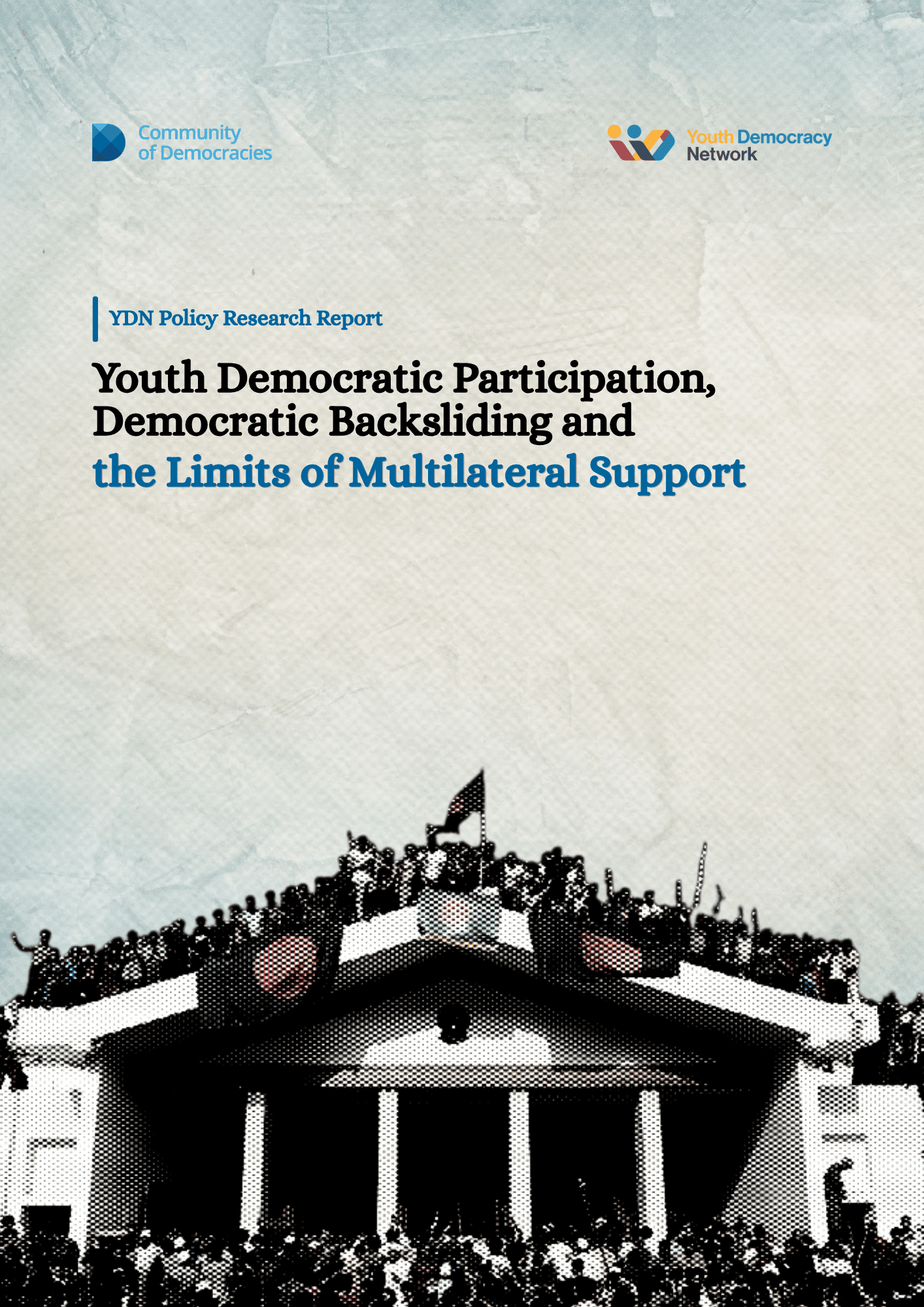
Authored by Safayet Zamil Nowshan, this policy report assesses the operational effectiveness of international multilateral mechanisms in supporting young civic actors navigating active state repression and autocratization. Drawing on multi-site comparative case studies across five distinct regime configurations, Serbia, Myanmar, Uganda, Bangladesh, and El Salvador, the study highlights the growing structural gap between formal international commitments (such as UN Security Council Resolution 2250) and the real-world protection provided to youth on the frontlines of democratic resistance.
The publication demonstrates that formal multilateral access criteria systematically exclude informal, non-institutionalized youth movements, while geopolitical strategic interests frequently override democratic conditionality. It also illustrates how authoritarian regimes exploit these vulnerabilities by expanding state-aligned civic financing and digital surveillance architectures. To remedy these failures, the report offers concrete recommendations, calling for flexible rapid-response pooled funding windows, simplified access pathways for unregistered networks, standing post-transition support protocols, and conferred binding authority for multilateral enforcement bodies.
Download